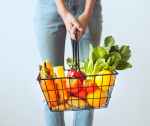
Fruits and vegetables are the most important part of a nutritious diet but how much is needed to get us to the recommended daily servings? And if you belong to the group who simply doesn’t like veggies, this can be a challenge.
The recommended daily fruit and vegetable intake varies from person to person, and it depends on factors like age, gender and physical activity level. As a basic guideline, someone who needs 2000 calories a day should eat:
- 2 cups of fruit
- 2 1/2 cups of vegetables
Vegetables should be consumed in a nutrient-dense form, with limited additions such as salt, butter, or creamy sauces and fruits should be consumed whole. Juices are acceptable if they are 100% juice without added sugar though nutritionists caution you will not be getting the fibre and other good benefits of eating whole fruit. One cup of 100% fruit juice counts as 1 cup of fruit.
Some Tips on Calculating Fruit & Vegetable Servings
In most cases, a cup means a cup but there are a few exceptions you should take note of:
- When it comes to salad, a cup may not be a cup. It takes 2 cups of leafy greens (eg spinach) to equal 1 cup of vegetables while 6 baby carrots only count as 1/2 cup of vegetables
- When it comes to dried fruit, a half cup of it equals one cup of fresh fruit. Similar to juice, when consumed in excess, dried fruits can contribute extra calories.
- One big piece of fruit is roughly a cup. An apple, an orange, a large banana, a nectarine or a grapefruit is equivalent to one cup of fruit.
- Starchy or root vegetables don’t count. Vegetables such as potatoes and corn should not count towards the daily servings as they are starchy and are more like rice or bread.
Fruits and vegetables are important sources of many nutrients, including dietary fiber, potassium, vitamin A, vitamin C, vitamin K, copper, magnesium, vitamin E, vitamin B6, folate, iron, manganese, thiamin, niacin, and choline. A diet rich in fruit and vegetables will keep our body in good form so be sure to include a full spectrum of this food group to achieve maximum benefits.
References:

